


Membrane
"I have 900 tds from the source and I get 70 tds through the membrane. Good product 👌"


Save Up to 50% with Factory Direct Pricing
Plus an additional 20% - 25% Off Select Systems!

Order by 12 PM EST and this system will be on its way the very next day.
Free standard shipping on most products over $199.
Free shipping on most orders over $199 in the continental USA. $299 minimum for extended delivery states: AK, AL, AZ, CA, HI, ID, MD, ME, MN, MS, MT, NH, NV, OR, UT, VA, VT, WA, WV. Freight orders excluded. Speak to a water expert for more details.
Our Master Water Specialists and Certified Water Specialists review your water analysis and address your specific water problems. WE then design a system that we'll guarantee will solve your water problem(s) and back it with our One-Year Money Back Promise (Guarantee).
It all starts with a Laboratory Test of your water. Then, our Master Water Specialists and Certified Water Specialists will review the results of your water analysis and scientifically discuss the best way to treat your water, provide on estimate of how to do that, and then we provide you a One-Year Guarantee of Satisfaction. It's our Promise to You that our system will do what we say or we will give you your money back*
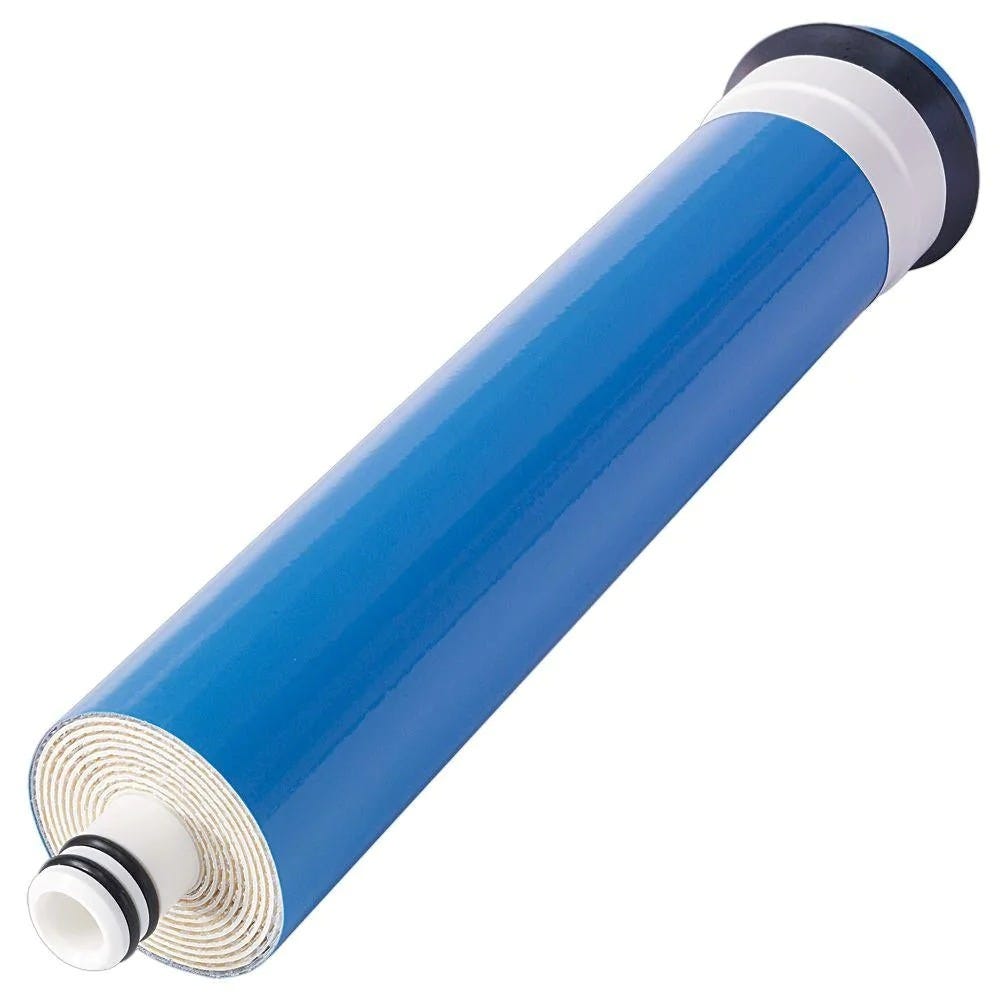
Drop-in fit for any standard 1812 housing
Confirmed fit for APEC (ROES-50), iSpring (RCC7), Watts, Pentair, Express Water, GE, and more — specs with test conditions published upfront, backed by WQA-certified water specialists who answer the phone.

My TDS keeps going up no matter what I do.
After 2–3 years, rejection drops — that's chemistry, not a system defect. Replace the membrane and you're back to rated performance. Stop troubleshooting a part that's past its service life.
I'm tired of paying OEM prices for the same standard part.
RO system brands charge a significant markup for a membrane built to the same 1812 TFC spec available direct. No middleman. No brand licensing fee. Same specification, better price.
I moved into a house with an RO system and have no idea what's in it.
If the housing accepts a standard 1812 element — that's nearly every residential 5-stage under-sink RO sold in North America — this is the direct drop-in. Not sure? Call us with your system model or existing part number. We'll confirm the fit in minutes.
I want someone I can actually call if something seems off after install.
Our WQA-certified water specialists in Indianapolis answer the phone. In about five minutes they can tell you whether you have a membrane issue, a pre-filter issue, or a pressure issue — and point you to the right fix.
The 1812 designation means 1.75 inches in diameter and 11.75 inches long — the residential RO standard across North America. Direct cross-reference for DuPont FilmTec TW30-1812-50, AXEON TF-1812-50, Toray RE1812-50, Watts W-1812-50, and Pentair TLC-50. Confirmed compatible with APEC ROES-50, iSpring RCC7, iSpring MC7, Watts Premier, Express Water, GE, Crystal Quest, and Hydro-Logic. Not certain? Call before ordering — we'll cross-reference your part number on the spot.
This membrane is rated at 95–99% TDS rejection at 60 psi operating pressure, 77°F feed temperature, 20% recovery, and 350 ppm feedwater (Buena Park City municipal water) — the industry-standard conditions used by every credible membrane manufacturer. We also state the 0 ppm chlorine tolerance clearly, because a working carbon block pre-filter is what keeps this membrane delivering clean water for 2–3 years.
US Water Systems has been solving residential water problems since 2001. Our technical support team holds WQA Certified Water Specialist (CWS) credentials and carries nearly 300 years of combined hands-on experience. When you call, you reach a water specialist who can diagnose in minutes whether you have a membrane issue, a pressure issue, a tank issue, or a pre-filter issue.
We sell direct. The same standard-specification 1812 TFC element that system manufacturers rebrand and mark up is available here at a fraction of OEM pricing — no retailer margin, no brand licensing fee. Backed by our 1-year satisfaction guarantee: if you're not satisfied, we make it right.

Standard 1812 membrane dimensions — 1.75″ dia. × 11.75″ long
Close the cold feed valve that supplies your RO system — usually a saddle valve on the cold water line under the sink. Open the RO faucet to release pressure from the system. This takes about 60 seconds and prevents water from spraying when you open the housing. Don't skip it.
Locate the membrane housing — the tallest canister in your RO system, separate from the filter housings. Unscrew the housing cap (a strap wrench helps if it's been years), then pull the old membrane straight out. Have a towel handy — a small amount of water in the housing is normal.
Slide the new membrane in tapered end first. It should seat firmly with light resistance — don't force it. Reinstall the housing cap hand-tight. Do not over-torque.
Turn the feed valve back on and let the system fill. Before drinking, run two to three full tank volumes through the system to flush manufacturing residuals and condition the membrane. Then check your TDS meter — you should see a significant drop from your pre-swap reading. If TDS is still elevated after flushing, call us.

The most common question replacement buyers ask is whether an aftermarket 1812 membrane performs differently from the OEM brand equivalent. The short answer: no — the differences that matter are in how the product is sold, not what's inside the housing.
| Specification | US Water 50 GPD | FilmTec TW30-1812-50 (industry reference) | OEM System-Brand Replacement | Mass-Market Value Brand |
|---|---|---|---|---|
| Form factor | 1812 standard | 1812 standard | 1812 standard | 1812 standard |
| TDS rejection | 95–99% (conditioned: 60 psi / 77°F / 20% recovery / 350 ppm) | 98–99% (conditioned spec published) | 98% minimum (conditioned spec) | "Up to 99.99%" — no test conditions stated |
| Chlorine tolerance disclosed | ✓ Yes — 0 ppm, clearly stated | Not highlighted on listing | Not highlighted on listing | Not disclosed |
| Pre-filter requirement called out | ✓ Yes — above the fold | No | No | No |
| US-based phone support | ✓ Yes — WQA-certified specialists | No consumer support | Brand-specific, limited access | No |
| Warranty | ✓ 1-year satisfaction guarantee | No consumer warranty published | "Contact customer service" | Varies by seller |
| Price vs. OEM | Less than OEM pricing | At or below OEM pricing | At OEM pricing | Significantly below OEM |
| System compatibility | FilmTec, AXEON, Toray, Watts, Pentair, APEC ROES-50, iSpring RCC7/MC7, Express Water, GE, Crystal Quest, Hydro-Logic | FilmTec OEM equivalent | Brand-specific systems only | Multiple brands cross-listed |
Competitor specs sourced from published product listings.
Thousands of RO owners replaced their membrane here and got it right the first time.
"Installed this myself in about 20 minutes. First RO membrane swap I'd ever done. Size matched my housing exactly — no adapters, no surprises. After flushing three tank cycles, TDS dropped from 52 ppm to 6 ppm. That's better rejection than my original element was delivering after two years."
— David R., Indianapolis, IN
"My RO had been producing water at 35 ppm TDS for a year — it used to deliver 5. Replaced the membrane and after the break-in flush I'm back to 4 ppm. The conditioned rejection rate in the specs is accurate, and it's genuinely refreshing to see a product page list the actual test conditions instead of just saying '99.99%.'"
— Marie T., Phoenix, AZ
"After install, TDS was still high after flushing. Called US Water Systems and a water treatment tech diagnosed the problem in about three minutes — my carbon block pre-filter was exhausted and passing chlorine through to the new membrane. Ordered the replacement pre-filters on the same call. Problem solved. That kind of support is rare."
— James K., Atlanta, GA
Representative testimonials. Replace with verified real customer reviews before publishing.
Most RO membranes need replacement every 2–3 years, but the right signal is your TDS reading — not the calendar. When your rejection rate drops noticeably (your post-membrane TDS climbs while your feed water TDS stays the same), the membrane is past its service life regardless of age. Water with higher TDS, lower pressure, or chlorine exposure from a degraded carbon pre-filter will shorten membrane life below the 2-year mark. If your RO water was once producing 5–8 ppm and is now producing 25+ ppm, it's time to replace.
The clearest signal is a rise in your post-membrane TDS reading. If your system once delivered water at 5–8 ppm and is now reading 25 ppm or higher with no change in your feed water, the membrane's rejection rate has declined and it's time to replace. A secondary signal is reduced flow from your RO faucet. TDS meters cost $10–15 and are the most reliable way to monitor membrane performance over time.
GPD stands for gallons per day — the membrane's rated water production under standard test conditions (60 psi, 77°F, 20% recovery, 350 ppm feedwater from Buena Park City municipal water). A 50 GPD membrane produces approximately 50 gallons of filtered water per day at those conditions, which is sufficient for most residential households. Most residential under-sink RO systems are designed around a 50 GPD membrane. If you're replacing a membrane, match the GPD rating on your existing element or the label inside your membrane housing.
"1812" is the industry shorthand for a membrane element that is 1.75 inches in diameter and 11.75 inches long — the standard dimensions for residential under-sink reverse osmosis systems in North America. The designation comes from the approximate dimensions: 1.8 inches × 12 inches. If your system's membrane housing accepts a 1812-format element, any 1812-rated membrane from any manufacturer is a confirmed drop-in fit.
Yes — as long as the replacement matches your system's membrane form factor, brand doesn't matter. The 1812 form factor (1.75" diameter × 11.75" long) is an industry standard used by virtually every residential RO manufacturer in North America. Any 1812-format membrane from any manufacturer is a direct drop-in replacement. Using a non-OEM membrane does not void your RO system warranty — the warranty covers the system hardware, not the consumable filter elements.
If your RO system accepts a standard 1812 membrane element (1.75" diameter × 11.75" long), this is a confirmed drop-in fit with no modifications needed. That covers nearly every residential under-sink RO system sold in North America, including the APEC ROES-50, iSpring RCC7, Watts, Pentair, GE, Express Water, Crystal Quest, and Hydro-Logic. If you're not certain, call before ordering — our water specialists can cross-reference your part number or system model at no charge.
TFC (thin-film composite) membranes have zero tolerance for free chlorine — even small amounts will oxidize the membrane layer, permanently degrading its TDS rejection rate within days to weeks. A carbon block pre-filter removes free chlorine before it reaches the membrane, which is why a functioning carbon pre-filter is required for any TFC membrane to last its rated 2–3 years. If your carbon pre-filter is exhausted and passing chlorine, replacing the membrane alone won't fix the problem — the new membrane will fail at the same rate.
Yes — strongly recommended. A degraded carbon block pre-filter is the single most common cause of premature membrane failure. When the carbon is exhausted, it passes free chlorine directly to the TFC membrane, which oxidizes the membrane layer and drops rejection rates within weeks. If you don't know when your pre-filters were last changed, replace them now. Call our support team — they'll help you identify the right pre-filter options for your specific system.
Yes. RO membrane replacement is a standard DIY task most homeowners complete in 15–20 minutes — no plumber required. Shut off the feed valve, release pressure at the faucet, unscrew the housing cap, pull the old element out, insert the new one tapered end first, reinstall the cap, and flush for two to three tank cycles. A housing strap wrench is the only tool you may need — and it's often included with your RO system. If you want step-by-step guidance while you work, our team is available by phone.
Elevated TDS after installing a new membrane is almost never a defective membrane — it's almost always one of three things:
Our water specialists can walk you through a phone diagnosis in about five minutes.
We sell direct — no middleman markup, no brand licensing fee. RO system manufacturers charge a significant premium for a membrane built to the same standard 1812 TFC specification; you're paying for the brand name, not a better membrane. Same spec, better price, backed by our 1-year satisfaction guarantee.
Because we publish the test conditions alongside the number: 60 psi operating pressure, 77°F feed temperature, 20% recovery, and 350 ppm feedwater (Buena Park City municipal water). Those are the standardized conditions every credible membrane manufacturer uses to establish rejection ratings. When a listing shows "99.99% rejection" with no test conditions, that number is unverifiable — rejection rates drop significantly with lower pressure, higher temperature, or higher feedwater TDS. Our rating is specific, honest, and consistent with published specs for name-brand TFC elements in the same residential class.
For most residential under-sink RO systems, 50 GPD is the correct replacement. Standard 5-stage RO systems sold under brands like APEC, iSpring, Watts, and Express Water are designed around a 50 GPD 1812-format membrane. A 75 GPD element typically uses a different form factor (longer or wider) and may not fit a standard 1812 housing. Match the GPD rating on your existing membrane label or your system's product specs — if you're not certain, call us with your system model.
A standard 1812 TFC membrane with verified fit, published test-condition specs, and a 1-year satisfaction guarantee — backed by WQA-certified water treatment specialists who answer the phone.
REPLACE MY MEMBRANE TODAY1-year satisfaction guarantee · WQA-certified support · Based in Indianapolis, IN
Overall rating: 4.659091 / 5 from 44 reviews.
The US Water Systems Residential Membrane 50 GPD offers clean and safe drinking water with low parts per million. Customers appreciate the high quality of the product and the reliable customer service provided by the seller.
Review topics: ["customer service","quality","replacement","water","staff","service","instructions","filter","unit","tasting","price","system"].
"I have 900 tds from the source and I get 70 tds through the membrane. Good product 👌"
— Robert S. (5/5)
"We've been purchasing this 5 Stage Reverse Osmosis water system for years and have no complaints about the product. When we had a question, customer service was very easy to work with over the phone."
— Tierney, K. (5/5)
"Works well,easy to install"
— Scott K. (5/5)
"I've used this unit for 6 years now and I like the idea of knowing we are drinking clean water,my mom lives next door and ever year I change her filters for her,"
— Richard P. (5/5)
"Clear instructions made replacing my RO membrane super easy, and it pulled the numbers right back where I wanted them. Very competitive price with good quality and CUSTOMER SERVICE - hard to find these days."
— Jeff D. (5/5)
"Great product"
— Catherine L. (5/5)
"I used this as a replacement for the RO Membrane that came with the system, but it has minimal water flow. Lots of water going straight to the drain. I believe it's possibly defective, but I've been unable to contact support after several tries, so I can't be sure. Maybe if there were a working chat or phone support system, there'd be a fix."
— Lawrence E. (1/5)
"US Water Systems provided replacement filters for my home RO system installed in my kitchen beneath the sink. The instructions provided with the filters were easy to follow. I replaced all five filters and my water delivery from the RO tank improved significantly. I was concerned about potential leaks in the fittings following the replacement, but the replacement was completed successfully and my water flow/delivery improved dramatically."
— JEFFREY M. (5/5)
"Have had this system installed in our house for many years. Very happy with it. Good quality products, reliable customer service."
— Mark R. (5/5)
"I purchased my RO system from US Water years and years ago. It is a great system and high quality. In the course of time, I have replaced the filters numerous time. Again . . . the quality is consistently good. I will also say that the replacement is easy to do. When I had an issue with the pressure in the tank . . . I called tech support or customer service for assistance. They were very helpful and this is the most valuable trait in any product. Having product support after the purchase is admirable in today's world. Thank you!"
— Jay F. (5/5)

Receive our latest updates about our products & promotions.
Thanks for subscribing!
This email has been registered!