





Ask A Question: TDS Creep
Question: Hi. I have well water. The TDS in the tap water is 700. I have a 3 stage RO system. Number 1 is the sediment filter. Number 2 is the TFC membrane. Number 3 is the carbon post filter. I have added a permeate pump. The water coming out of the RO is 200 ppm. Is this too high? Is there anything else that I can add to the system to reduce the ppm even more? Thanks in advance, Paul
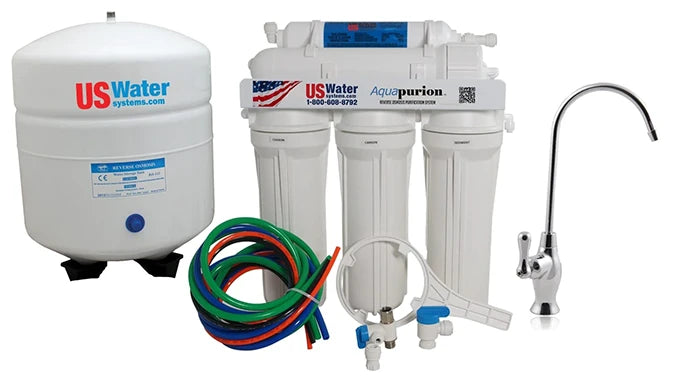
Answer: I have a permeate pump RO in my house and you are seeing what is called "TDS Creep." Permeate pump RO systems have trouble with TDS Creep because they respond to the smallest pressure change in the distribution system. When a slight amount of water is used the permeate pump system will start processing water. If the amount of water being used is small; such as a cup of water; the system doesn't run very long to replenish the water used. Short system run times like this causes TDS creep because the system doesn't run long enough to compress the membrane and create quality water. The membrane needs full pressure to compress and give the best quality water. Full pressure will not be present when small amounts of water are used. It is best to use the tank contents daily to ensure the TDS creep will not be a problem. There's nothing worse than a large storage tank of water that is only used to fill a 32 oz. glass 1-2 a week. After a few weeks the water quality in the tank will be very poor. In regards to a permeate pump RO, it is better to size the RO tank to make sure it will be used within 1-3 days. A standard system with an automatic shutoff valve (ASO) is used water can be dispensed until the distribution system pressure falls below 65% of the incoming line pressure. The system will then start to run and will run for a long period to replenish the tank and the distribution system pressure. Since the run time is longer TDS creep is not likely. A permeate pump RO is wonderful for increased pressure, especially if you have a fridge with an icemaker and/or water dispenser. In my case, that is why I have it. However, I simply drain my tank once a week and all is well. In your case, drain the RO a couple of times and then test the TDS. It should be below 100 ppm!
16 Comments
What are your thoughts on auto-flush valves or manually flushing the membrane?
Mark, how do you empty the tank weekly? Is it a turn on the sink valve for a certain amount of time or take the tank to the sink and empty it? I ordered a larger tank to have the capacity with the permeate pump because I have the fridge with Ive maker. I am guessing that I should empty the tank every once in a while. Thanks.
Will the use of a powered booster pump prevent TDS creep?
Mark, I have the same issue.
What do you think of setting up 2 tanks (I have an extra one that has not been used yet) and a few valves that would allow me to toggle those two tanks between being refilled and providing water to the tap, fridge, etc? Once a tank is empty I would flip the valve which would provide water from a full tank and completely refill the empty one.
Seems like less work than draining the tank each week.
Thanks!
Great article. My RO system is challenged with TDS creep in my system, a 5 stage RO system w/ the Aquatec ERP 500 permeate pump. My city water pressure is only 45 psi. What about adding a in-line booster pump to the RO water IN feed to increase overall pressure on membrane. I would think I would then not need the permeate pump either. Thoughts?
What about a solenoid powered by a timer and set to flush the membrane for 30 seconds every hour. Wouldnt that keep the water fresh in the membrane?
I guess you can try it I would not go to that trouble, but it might work.
Yes!
Absolutely, not a problem.
They are more style than substance, but they are OK.
30 or 60 seconds. Sure. That works.
Just turn on the RO faucet and let it run until it drips out.
Will check valve on permeate out line prevent TSD creep
Great question and we appreciate you following up on that! 😊 We’re happy to report that we’ve made significant progress on certifications since that 2024 response.
Our Waterlogix RO membranes are NSF-58 certified and manufactured in a state-of-the-art ISO-9001 compliant automated rolling facility, so the core component of our RO systems meets that standard directly.
To give you a quick breakdown of what NSF-58 covers: NSF/ANSI 58 pertains specifically to reverse osmosis systems and evaluates their reduction of contaminants such as arsenic, fluoride, radium, sulfate, and others.
Additionally, our RO storage tanks are NSF certified and approved under NSF standard 58 as well, so you can feel confident that the key components of our systems have been independently tested and verified.
For a full breakdown of all current certifications on the specific system you’re interested in, give us a call at 1-800-608-8792 and our team will walk you through every detail. We want to make sure you have everything you need to feel completely confident in your purchase!